DISCOVER THE ‘EXHIBITOR’S ECO-TIPS’
Eco-friendly habits to adopt!
Climate change is one of the major challenges of our time. Our responsibility, as event organisers and community facilitators, is to play our part in this transformation by minimising the environmental impact of our trade fairs and conferences.
But for this ambition to become a success, it must be a collective endeavour. That is why we are inviting you, as exhibitors, to take action and reduce your environmental footprint by adopting simple and effective measures.
What responsible exhibitors should do
BEFORE
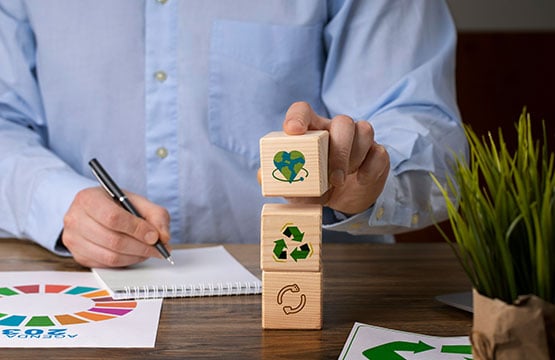
I’m adopting the 4R approach
- REJECT what I don’t need
- REDUCE what I need
- REUSE what I already have
- RECYCLE what I haven’t been able to refuse, reduce or reuse
Promotional items and leaflets: are they really useful?
If so, opt for locally, French or European-made products with a minimal carbon footprint (little or no individual packaging, plastic packaging, etc.). For printed materials (brochures, catalogues, leaflets, etc.): keep them to a minimum and make them as environmentally friendly as possible (digital printing, few images, no solid colours, etc.).
DID YOU KNOW?
For a tote bag to contribute less to global warming than a single-use plastic bag, it needs to be reused between 52 and 131 times*.
* Brut media, 2018

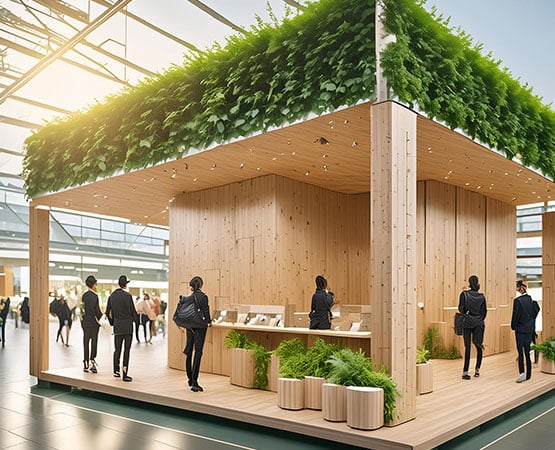
I’m designing my stand with sustainability in mind
- Choose a pre-fitted or modular stand
- Or give your interior designer some guidance along these lines (reuse, eco-design, the circular economy)
- Open it up! Fewer partitions mean less material used, and greater visibility for your stand from the aisles!
DID YOU KNOW?
Reusing furniture reduces its carbon footprint (100 kg CO₂ eq for the manufacture of a table, 800 kg CO₂ eq* for the manufacture of a wardrobe). And the more versatile the components are, the better they will be able to adapt to your future needs.
*ADEME LCA 2018
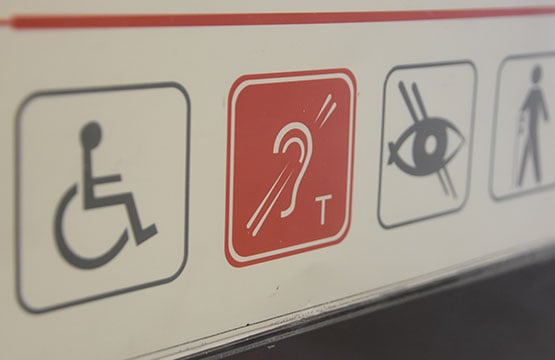
I am open to all forms of travel
Remember to arrange your spaces accordingly
- Ramp
- Floor height
- Accessible audiovisual terminals ...
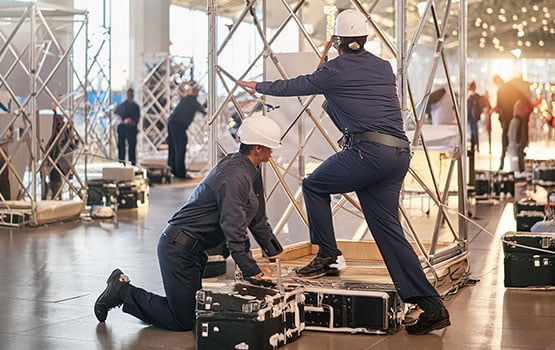
I select local service providers
WHILE
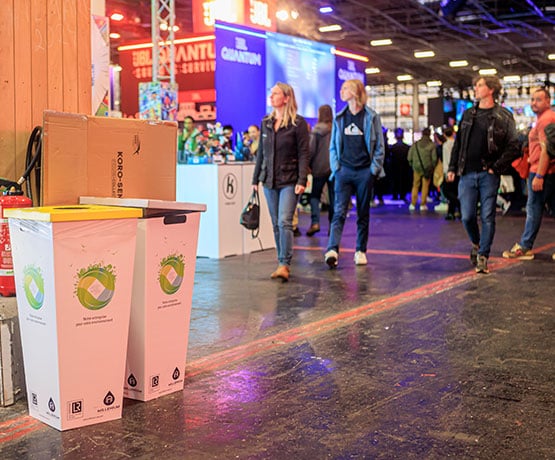
Fewer single-use items, less waste
The best waste is the waste we don’t produce.
For the inevitable ones? Let’s sort them according to the guidelines (paper/cardboard, glass, plastic, wood, metal, organic waste, etc.). As for food waste, let’s reduce it by sharing any surplus with the staff or donating it to a charity.
DID YOU KNOW?
An event attended by 5,000 people generates, on average, 2.5 tonnes of waste and 500 kg of paper*.
* ADEME
Via Wi-Fi rather than 4G or 5G
If the venue has it, of course, do make the most of the free Wi-Fi.
DID YOU KNOW?
1 gigabyte of data transferred has up to 20 times greater environmental impact on 4G than on Wi-Fi or ADSL*.
* GreenConcept white paper

I’m saving energy
Several possible solutions
Switch off your equipment when leaving the stand (tip: a power strip allows you to switch everything off with a single button), opt for LED lighting, hire energy-efficient equipment (A+ rating)…
DID YOU KNOW?
An evening event attended by 5,000 people would consume an average of 1,000 kWh of electricity, which is equivalent to the electricity consumption of one French person over two and a half months*.
* ADEME
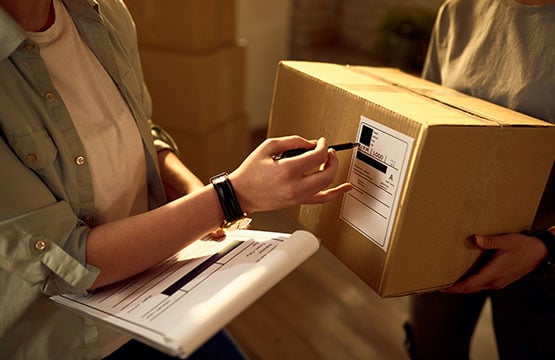
I optimise deliveries
I encourage my teams to travel in a more low-carbon way
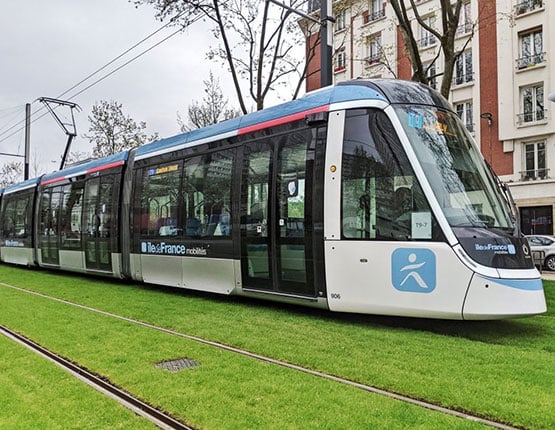
Whether by sustainable transport (on foot, by bike), by public transport (train, underground, tram, etc.) or by car-sharing…
DID YOU KNOW?
A journey on the RER from Paris Montparnasse station to the Paris Nord Villepinte Exhibition Centre produces up to 40 times fewer greenhouse gas emissions than a journey by car with a combustion engine*.
* ADEME CO₂ calculator
I’m doing away with plastic bottles
Let’s prioritise water jugs on the stand and water bottles that can be refilled at the water fountains for the teams.
DID YOU KNOW?
It takes 255 litres of water to produce the plastic for a single bottle of mineral water, and this process emits 39 kg CO₂ eq.


I’m opting for more balanced meals
By choosing seasonal, local and organic food… and by cutting down on meat consumption.
DID YOU KNOW?
A tomato grown in a greenhouse produces eight times more CO₂ emissions than a seasonal tomato grown in open ground.
AFTER
I prioritise recovery
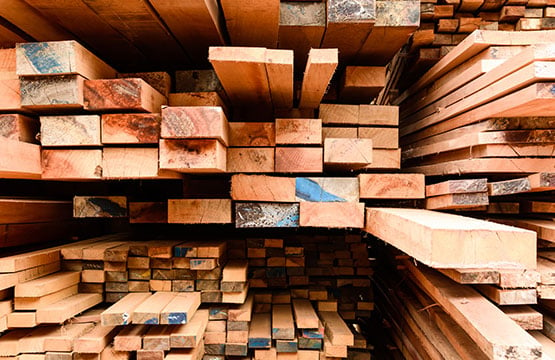
Collect the stand components (set design, furniture, signage, plants, promotional items, etc.) so that they can be reused next year.
Don’t need it any more?
Donate them to charities, theatres or schools, or contact the organiser to find out if a collection scheme has been set up.
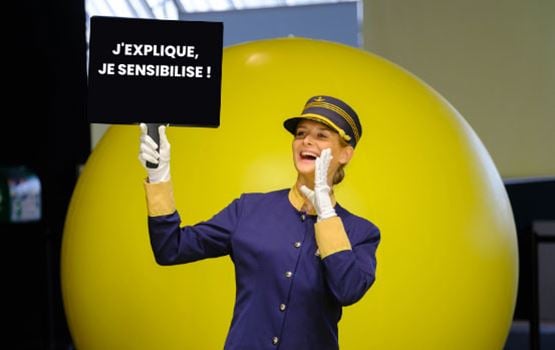
I explain and raise awareness!
Explain your responsible approach to your visitors, staff and partners, and highlight its benefits!