
FAMILY MICRO-ADVENTURE: HOW TO GO CAMPING WITH YOUR CHILDREN
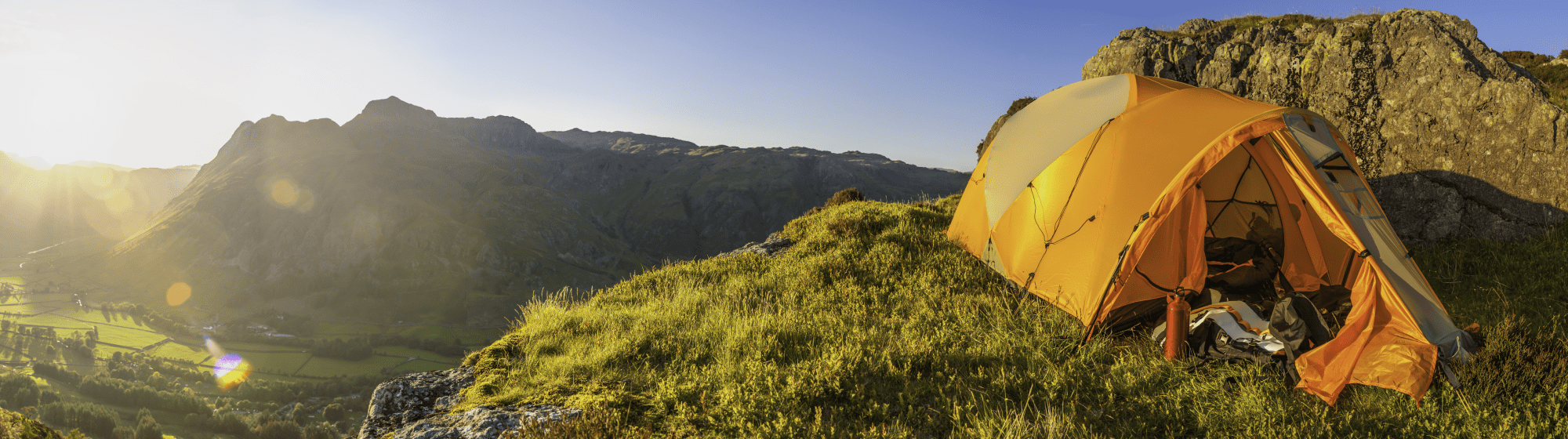
A family holiday at a campsite or in the wild: what’s the difference?
Did you know that ‘camping’ and ‘bivouacking’ aren’t the same thing? A bivouac is a rudimentary camp set up in the wilderness to spend the night under the stars or in a tent. Whereas camping involves pitching a tent with the aim of staying in the same place for several days. So if your aim is to go on a road trip around France and stop at a different place every night, you could say you’re camping!
Going camping with children: how can you avoid having to carry everything?
Backpacking is most often associated with hiking. But when you say ‘walking’, you’re also talking about ‘carrying’. You’ll need to pack all the equipment, water and food for the whole family into your rucksack. If there are four of you travelling and you’re going away for several days, it can become quite a burden. That might put you off the idea of camping a bit. Fortunately, there are other options! Have you thought about cycling? With a cart and saddlebags, it’s so much easier if the road isn’t too hilly. Another great option for children: a donkey. The animal carries most of the kit, so you can travel light! What’s more, if one of your children is tired, they can climb onto his back.
Be prepared for any eventuality before setting off on a camping trip
- First of all, before you set off, check the weather forecast. Camping in the rain doesn’t have the same charm as camping under a beautiful starry sky. If you want your children to join you on your next expedition, it’s best not to put them off straight away.
- Next, make sure you’re properly kitted out. That doesn’t mean taking everything with you, but rather taking what you need to cope with the heat, the humidity and the cold. You should also choose clothes that dry quickly. Roll them up in your bag to pack them down tightly so they take up as little space as possible.
- Take a tent that’s as light as possible, some inflatable mattresses to protect you from damp, a good duvet and a camping stove.
- Don’t forget your head torches and first-aid kit. It doesn’t take much to get a niggle!
- Make sure you pack some simple meals and water. You can take freeze-dried sachets, which take up very little space, or buy simple things like pasta, sausage and a few treats. Marshmallows to roast, for example. Success guaranteed! Put the required amount into zip-lock bags that are easy to carry. If you’re going away for several days, find out where you can stock up on supplies so you don’t have to carry everything with you!
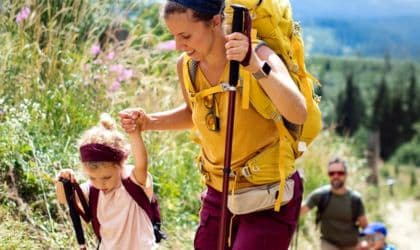
Choosing the right campsite when travelling with children
Please be aware that in France, you are not allowed to camp just anywhere. It is therefore important to find out in advance what the rules are in your area so that you don’t pitch your tent just anywhere.
- You are allowed to camp in national and regional parks at the end of the day, provided you leave early the following morning and do not light a fire.
- If you are on private land, please ask the owner for permission.
- Start looking for the perfect spot to sleep at the end of the day: a flat area so you don’t roll around during the night, and not too damp; ideally sheltered from the wind and not too far from a water source, but not right next to it.
- Avoid standing under a tree.
- Try to find a lovely spot with a nice view and plenty of space for the children to play, run about and climb.
How do you set up your camp?
Once you’ve found your place, it’s time to make your cosy little nest.
- Get your children involved in pitching the tent.
- Set up the sleeping bags and mats straight away so that they have plenty of time to regain their loft.
- Organise your living space.
- Set up a kitchen area for the meal. Please do not light a campfire. In fact, although it is very enjoyable, it is not recommended as it poses risks to the environment.
- The children will be delighted – for an overnight camp, there’s no need to have a shower! However, please make sure they do not throw their toilet paper on the ground.
- Do not leave any food outside overnight, as this may attract animals.
- You’re not at a campsite, so everyone gets up early and packs up camp quickly to make the most of another day of exploring.
- Before you leave, please make sure the place is in the same condition as when you arrived. There must be no sign that you have been there.